




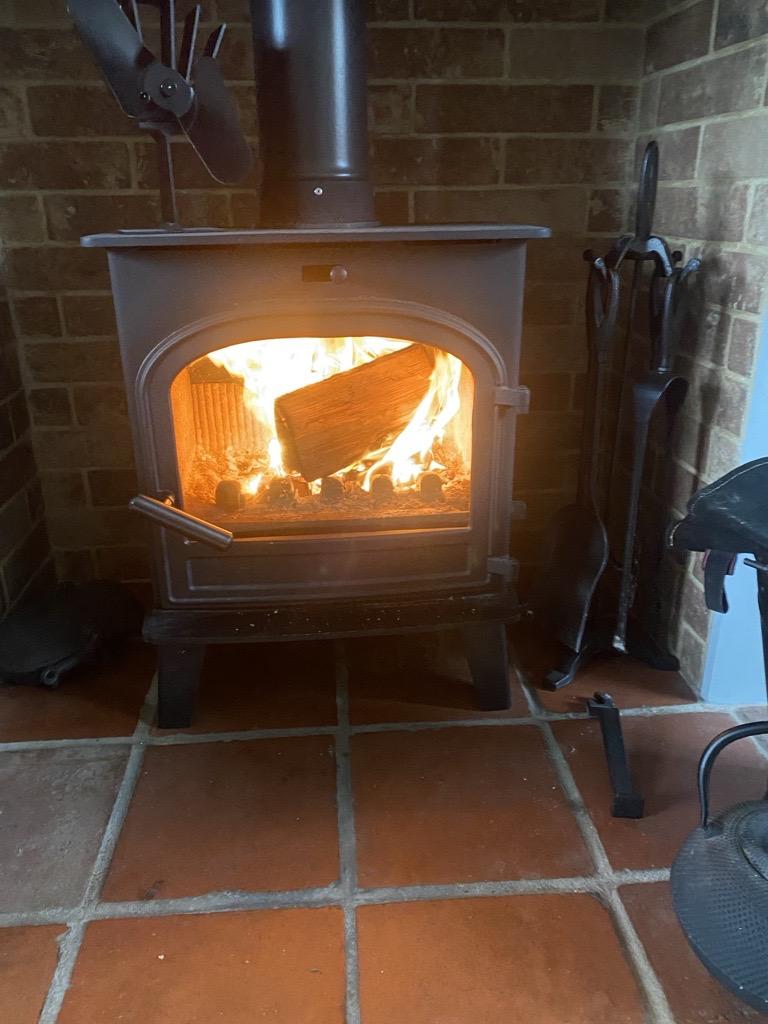
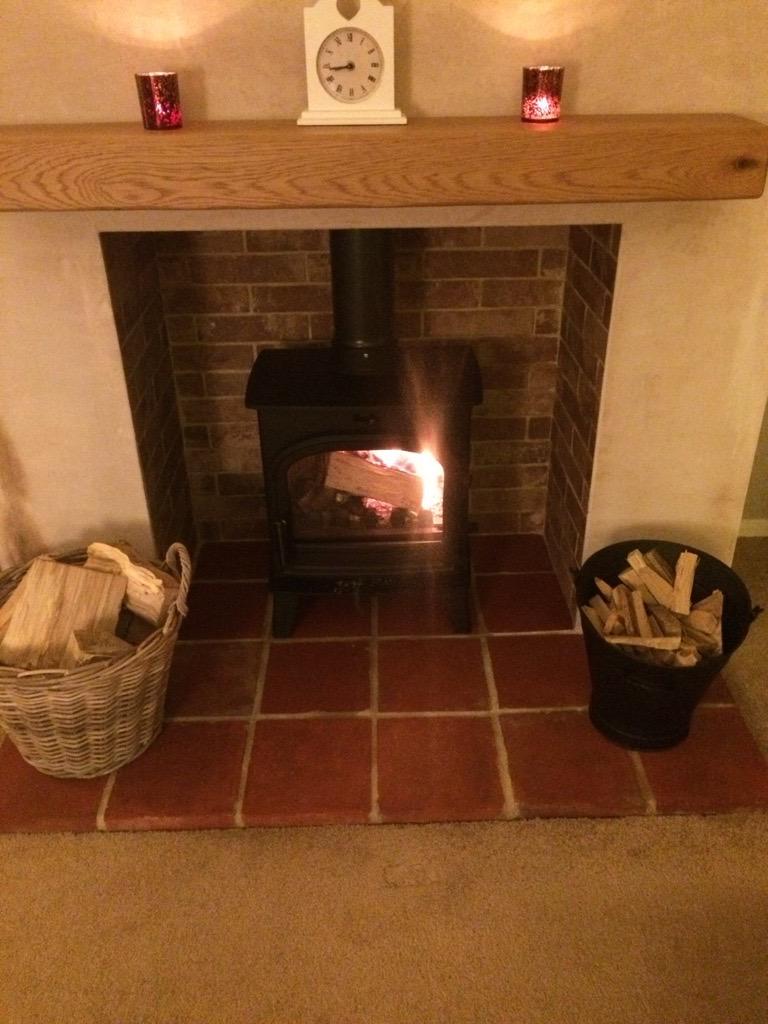

Wood-burning stoves could be effectively banned in Norwich under proposals being considered by the city council.
Green councillors are proposing bringing in the measure which would see anyone caught releasing smoke from a chimney fined £300.

Smoke control zones are already imposed in three neighbourhoods - King Street, Bowthorpe and the area around Norwich Airport.
But the Greens want to see this expanded as one of a number of measures they say will improve air quality in the city.

In a motion tabled by Hannah Hoechner, to be discussed on Tuesday, the Green councillor said domestic wood-burners were now a major source of air pollution, which she says has led to "thousands of deaths and serious illness each year".
"Clean air is a right for everyone in Norwich, and no one should be exposed to harmful air pollution because of where they live," she continues, adding: "Protecting and improving air quality is a matter of justice."

Under the proposals, people across the city would be unable to burn wood indoors, except in certain heating systems which would be exempt.
Households would still be able to burn certain authorised 'smokeless' fuels, of which there are 286 options to choose from. These include anthracite and semi-anthracite.
However, the motion calls for Norwich City Council to support entirely phasing out "non-essential" wood burning as part of a government consultation on the issue.
Ms Hoechner also wants to see City Hall officials conduct a campaign to raise awareness about the health risks of using wood-burning stoves to encourage people to stop using them.
A report by Hertfordshire County Council and the Global Action Plan charity last year claimed that the burning of wood and coal in homes contributed to almost 2,500 deaths a year.
Other studies have claimed that domestic burning contributes around a fifth of fine particulate matter – or PM2.5 – which is almost equal to road transport.

The motion does not call for any restrictions on fire pits and wood-fired ovens, although it does say people should be more aware of the dangers.
Garden bonfires would also still be allowed, although the Greens say people should be encouraged to compost rather than burn their garden waste.

Read the motion in full....
This Council NOTES:
1) That air pollution is a killer, causing heart and lung disease, cancer and other health problems, and that air pollution affects different aspects of health at even lower concentrations than previously thought (WHO global air quality guidelines 2021).
2) That while the impacts of air pollution are ubiquitous, their burden disproportionally falls on the most vulnerable in society, including children, the elderly, and low-income communities (Environmental Improvement Plan 2025: 40).
3) That air pollution negatively impacts both terrestrial and aquatic ecosystems, degrading environments and reducing biodiversity.
4) That exposure to air pollution is now the second leading risk factor for death in children under five, both globally and in the UK.
5) That fine particles (PM2.5) have been shown to be particularly damaging as they can enter the bloodstream and internal organs (Environmental Improvement Plan 2025: 41), and that emerging evidence suggests ultrafine particles/UFP (PM0.1) may pose even more severe health risks (WHO global air quality guidelines 2021).
6) That WHO air quality guidelines stipulate significantly lower thresholds for PM2.5 and NO2 pollution than UK legislation and that the UK does not currently have established legal air quality limits for ultrafine particles (PM₀.₁); that the UK legal limit for NO₂ under Air Quality Standards Regulations is an annual mean of 40 µg/m³, which is four times higher than the WHO’s recommended annual mean of 10 µg/m³; that the current UK legal limit for PM₂.₅ is an annual mean of 20 µg/m³ and that the Environmental Improvement Plan 2025 stipulates an annual mean of 10 µg/m³ by 2040, which would still be twice the WHO guideline of 5 µg/m³.
7) That while air pollution in Norwich has not recently exceeded national annual mean objectives for NO2 and PM2.5 concentrations, pollution levels were still significantly higher than the levels recommended by the WHO, and that recent improvements in air quality are believed to result from measures such as the introduction of electric busses and an increase in low-emissions vehicles (Norwich City Council Air Quality Annual Status Report 2025).
8) That domestic wood-burning is now a major source of fine-particle (PM₂.₅) air pollution in the UK, leading to thousands of deaths and serious illnesses each year
9) That engine idling contributes significantly to local air pollution, including around schools (Mendoza et al 2022).
10) That recent evidence highlights that UFP levels near airports are routinely far above those defined as high by the WHO.
11) That Norwich City Council doesn’t currently monitor UFP pollution anywhere in the city, that the methods used to monitor other forms of air pollution do not routinely capture short-term peaks in pollution, such as those that may occur during school drop-off and pick-up times, and that they do not capture hyperlocal pollution events, such as those linked to the use of wood stoves (Air Quality Annual Status Report 2025).
12) That on 17 November 2021, Cabinet approved a range of recommendations made by the Scrutiny Committee after considering air pollution from woodburning in its meetings on 15 July and 9 September 2021.
13) That at present, only three small Smoke Control Areas cover limited parts of the city (King Street, Norwich Airport and Bowthorpe), leaving many residents without the same level of protection.
14) That 13 Council-owned properties still rely on the burning of solid fuels as their main source of heating, despite having been offered alternatives.
15) That numerous local authorities across the UK have implemented ambitious clean air campaigns, alerting residents to the dangerous impacts of engine idling and wood stove use among others.
16) That numerous local authorities across the UK already operate ‘School Streets’ whereby motorised traffic is temporarily restricted around schools at drop-off and pick-up times.
17) That the government announced plans to consult on further domestic burning measures in its updated Environmental Improvement Plan 2025.
This Council BELIEVES:
1) That clean air is a right for everyone in Norwich, and no one should be exposed to harmful air pollution because of where they live.
2) That protecting and improving air quality is a matter of justice.
3) That extending the Smoke Control Areas to cover the whole city is fairer, simpler and more effective than piecemeal coverage.
This council RESOLVES:
1) To enact in full the Scrutiny Committee recommendations on reducing air pollution from woodburning approved by Cabinet on 17th November 2021, and to report back to the Scrutiny Committee and Cabinet on the steps taken within six months.
2) To submit a response to the recently announced government consultation on further measures to reduce emission from domestic burning, expressing strong support for the phasing out of non-essential wood burning and a transition to cleaner heating, as well as demanding national action to raise awareness of the health impacts of wood smoke.
3) To take steps to extend the Smoke Control Area beyond to cover the entire city of Norwich.
4) To implement a communications strategy on air pollution for residents that: a) Highlights the dangers associated with burning solid fuels for domestic heating, asking people not to burn, and providing advice on cleaner heating options; b) Highlights the dangers associated with bonfires, encouraging people to use their brown bins and composting to depose of garden waste; c) Highlights the dangers of using fire pits and wood fired ovens, especially in enclosed spaces such as restaurants or pubs; d) Highlights the dangers of engine idling and its negative impacts especially on children; e) Informs residents of the enforcement powers available to the Council on smoke that constitutes a statutory nuisance and how they can report it.
5) To share information about the harmful effects of woodburning with relevant premises applying for a licence/renewal of their licence.
6) To work with the Norfolk and Waveney Integrated Care Board and the Norwich Health and Wellbeing Partnership to widely promote health education regarding the harmful effects of air pollution.
7) To present a report on enforcement against statutory nuisance smoke incidents and breaches of Smoke Control Area regulations and any challenges encountered to the Scrutiny Committee within the next six months.
8) To work with the Highways Authority on a campaign to discourage engine idling, especially around schools and early years settings, highlighting the harmful effects of air pollution especially on children.
9) To work with the Highways Authority and local schools and early years settings to explore the introduction of School Streets across Norwich, which have been shown to improve air quality around schools.
10) To explore options, including support for citizen science initiatives, for monitoring air quality near all schools and early years settings in Norwich at child-head height capturing short-term peaks in pollution, such as those that may occur during school drop-off and pick-up times, and to make any data subsequently gathered available to the public.
11) To support the creation of, and engage with existing citizen science initiatives, notably those monitoring hyper-local pollution events not commonly captured by the Council’s air quality monitoring system.
12) To urge Norwich Airport to start monitoring UFP pollution on the airport premises in the interest of both passenger and staff safety.
13) To continue working to end solid fuel use in all council-owned properties as soon as possible. "


Share