



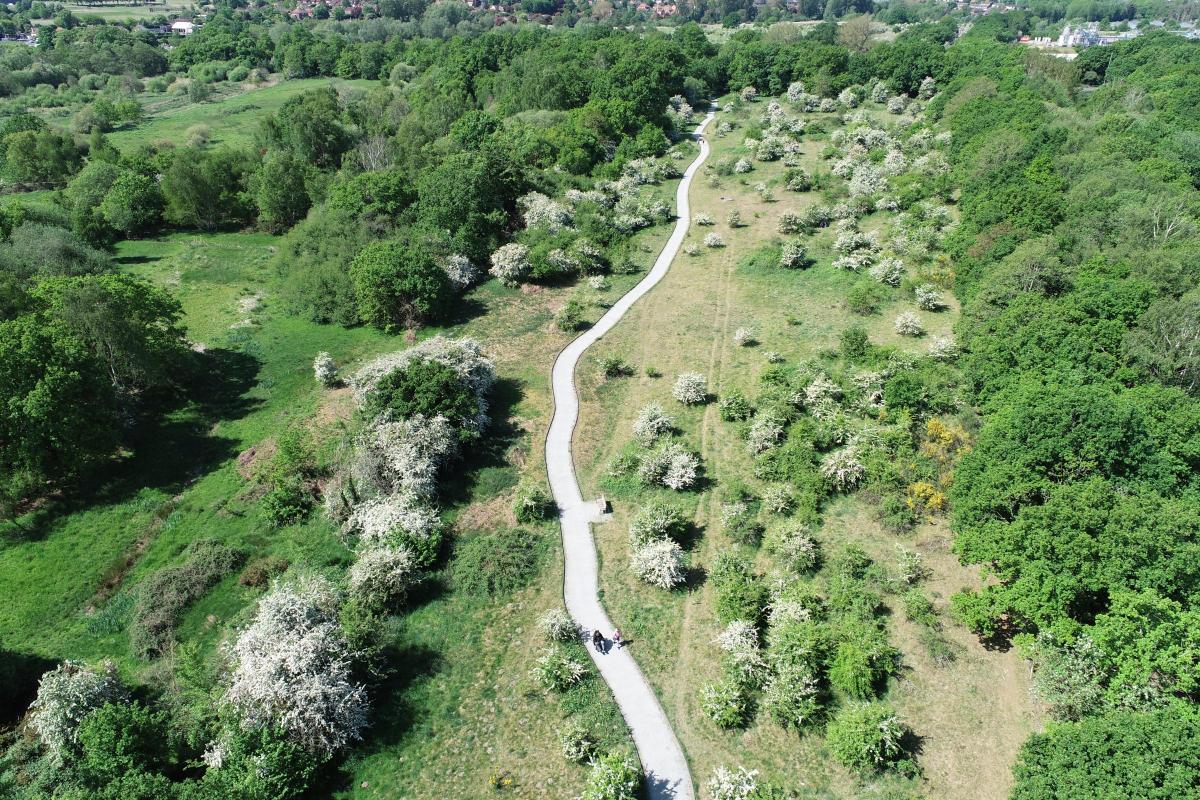

An £8m flagship council project to revitalise a Norwich park with a 3G sports pitch is facing a growing backlash from environmentalists.
They claim the proposed all-weather facility at Sloughbottom Park, in Mile Cross, will lead to vast amounts of harmful microplastics being released into the surrounding area.
The Norwich City Council scheme, which also involves a revamp of the park's pavilion, has been heralded as a "once in a generation" opportunity to boost wellbeing in one of Norwich's most deprived communities.
But the project now risks becoming engulfed in a row over its environmental impact.

It follows growing concerns about the impact of 3G pitches and their role in releasing microplastics from their artificial grass playing surface into the environment.
Steven Land, who lives in Mile Cross, has set up a petition, which has attracted around 500 supporters, calling for the council to scrap the project.
He said it would pose a particular risk to the Wensum, which is next to the park, as well as the nearby Norfolk Wildlife Trust-owned Sweet Briar Marshes nature reserve.

"Experts are saying these pitches are one of the worst sources of microplastic pollution," he said.
"I know people who have used other 3G pitches in Norwich and they have said plastic fibres end up everywhere, in there clothes, their home, in people's washing machines. That's not good."

The Mile Cross project is one of several 3G schemes in Norfolk which have recently opened or are in the pipeline, with others in Fakenham, Attleborough, Cromer, Thetford, King's Lynn and Great Yarmouth.
The pitches are popular because they can be used in all weather conditions without the playing surface deteriorating and require less maintenance.
But according to the Department for Environment and Rural Affairs, the facilities could pose an emerging threat to the environment.
Last year, it published a report that called 3G pitches the "main source of intentionally added microplastic pollution in the UK".
Up to 300 million fibres can be lost from a single pitch each year, along with a range of 'forever chemicals', known as PFAS (per-and polyfluoroalkyl substances).
It found the chemical-laden plastic grass blades and rubber crumb infill were a significant source of pollution, releasing thousands of tonnes of microplastics into drains, soils, rivers and wildlife.
Microplastics are becoming a growing concern due to the risk of harm to health and ecosystems, and the UN estimates there could be more than five million tonnes of the particles seeping into the environment each year by 2040.
Experts fear it is an emerging crisis we are yet to fully understand the implications of, as the materials can take hundreds or thousands of years to decompose.
Councils are frequently gaining funding to build them through grants from the Football Association (FA).

Mr Land, who was one of the first Green councillors to be elected in Norwich, says City Hall should look to try more recent technology for the artificial pitch, such as using cork materials, which have recently been used as part of an FA trial in Bury St Edmunds.
Lucy Galvin, Norwich Green Party interim leader, shares these concerns and has called on Norwich City Council to ensure every effort is made to prevent any pollution coming from the grounds.
She said: "This is of great concern. I have asked cab if they can clarify what actions will be taken to monitor microplastic contamination, if it is identified, and whether this monitoring will be carried out independently or by the pitch operator.
"Further, if an environmentally approved alternative infill becomes available, will funding be ring-fenced now for a timely replacement?
At a recent cabinet meeting, Carli Harper, said the pitch will meet "strict requirements" to limit plastic pollution, adding that the revamp offered a "once in a generation opportunity to improve the wellbeing of people in Mile Cross" through creating the new facilities.
A council spokesman added: “The all-weather football pitch is an integral part of the wider Sloughbottom Park revamp which will deliver substantial sporting, health and social benefits for residents of Mile Cross, which is one of the most deprived parts of the country.
"The all-weather pitch will provide a safe, durable all-year-round playing surface, meaning residents will be able to spend more hours getting fit and having fun. At the same time, we will be putting in robust mitigation procedures to address environmental concerns surrounding the all-weather pitch.”

Following Defra's report, Sports England issued a statement saying it is exploring new containment measures and alternatives to the current materials used in 3G pitches.
A spokesman said: "Many of the alternatives to rubber crumb are new to the market, and little is known about their performance, durability, availability, lifecycle cost and importantly the impact on player experience.
"We are entering a period where there will be choices to make and it’s important that data exists to help future artificial pitch owners make the right choice for their pitch.
"Until we have a clearer understanding of these alternatives, we believe that the adoption of containment measures in pitch design, such as perimeter boards, drainage filters, boot brushes and exit grids, are an important and responsible approach to prevent the migration of microplastics."
Norfolk Wildlife Trust has said it is reviewing the application for the 3G pitch at Sloughbottom Park and will respond in due course.


Share